How It Works
From hello to sideways.
A Happy Lap is designed to feel exciting without throwing someone into the deep end. We take the time to understand the passenger, introduce the environment and build the experience around how they respond.
How It Works
A Happy Lap is designed to feel exciting without throwing someone into the deep end. We take the time to understand the passenger, introduce the environment and build the experience around how they respond.
Five steps
Step 01
Before the day, we want to understand who we're creating the experience for. That might include:
We're not looking for reasons somebody can't participate. We're looking for what helps us work out whether the experience may be suitable, and how to shape it around them.

Step 02
There's no need to rush straight into the passenger seat. The passenger can become familiar with the environment, see the vehicle and understand what is about to happen before the experience begins.
For someone who loves cars, this might be the exciting part. For someone feeling uncertain, it can make a completely new environment feel much more predictable.
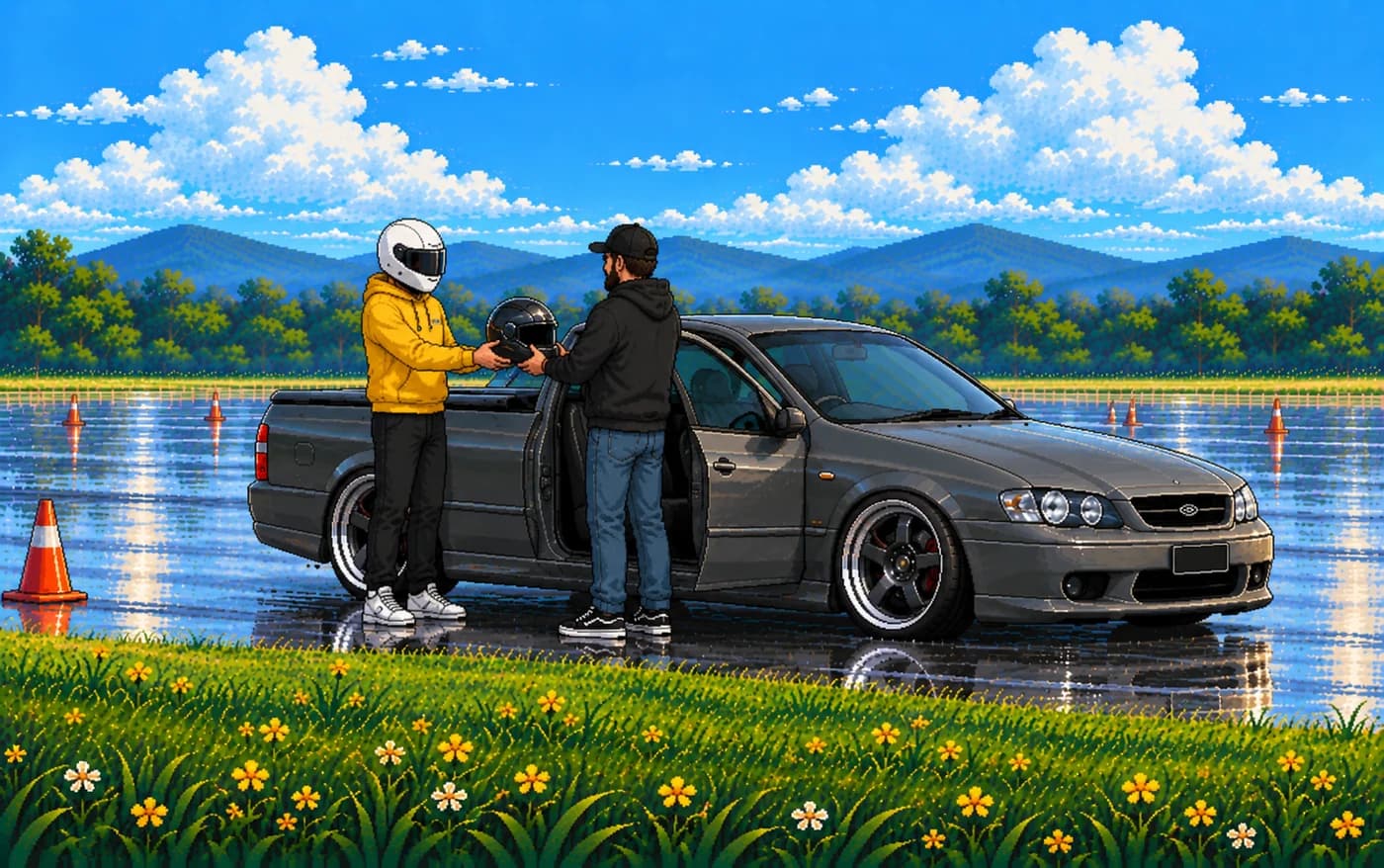
The car is a Ford BF Falcon ute. The passenger seat is a fixed bucket seat and the transfer in is low and tight, so it may suit some people and not others. A helmet is provided.
Tell us about mobility and transfers and we'll be honest about whether it may work.

Step 03
We don't need to send it on lap one.
Where appropriate, the first lap can be calmer. It gives the passenger a chance to feel the vehicle moving, understand the wet surface and experience what a lap actually feels like.
Then we see how they're feeling.

Step 04
Feeling confident? We can build the experience.
Want to keep things cruisy? That's completely fine too.
There isn't one correct way to enjoy Happy Lap. The experience is shaped around the passenger wherever reasonably possible.

Step 05
A Happy Lap isn't about setting a lap time.
It could be laughing all the way around.
Asking to go again.
Trying something they were nervous about.
Or simply stepping out of the car proud that they gave it a shot.
That's the whole point.

Support people
Families, carers and support workers often know the small things that make a big difference.
Tell us what helps.
We would rather have the conversation than make assumptions about what somebody can or cannot do.